- Home
- About Us
- Products
- Product knowledge
-
News Center
News Center
- Contact Us



In February 2026, the international trade landscape for refractory materials underwent significant shifts, driven by evolving demands in global high-temperature industries. Data reveals China's dual role in this strategic sector: while maintaining a robust demand for high-end minerals and specific synthetic corundum from overseas, certain segments experienced an explosive year-on-year surge in imports. This trend highlights the domestic manufacturing sector's escalating standards for raw material quality, particularly in specialty clays and corundum sourced from the United States, Japan, and Europe.
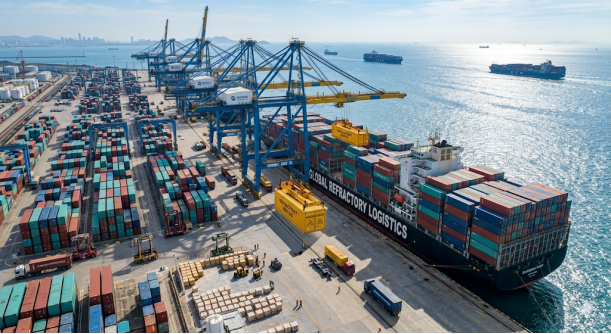 On the export front, China's status as the global "high-temperature cornerstone" has become increasingly solidified. Core products such as magnesia, silicon carbide, and synthetic corundum demonstrated strong market penetration in February. Notably, magnesia exports more than doubled compared to the previous year, primarily flowing into rapidly industrializing nations like the U.S., Indonesia, and India. This surge is not merely a result of scale but reflects the global steel and cement industries' urgent need for reliable basic refractories, where Chinese supply remains a critical security pillar.
Geographically, trade flows indicate a deepening of regional economic integration. Japan, India, and the U.S. remain primary destinations, yet the distribution of export shares is subtly shifting. Emerging markets, particularly India, are accounting for a growing portion of demand, while trade with Japan retains high dependency in specific mineral categories like magnesite. This blend of diversification and specialization bolsters the resilience of Chinese enterprises against single-market volatility and strengthens their bargaining power in the global raw material pricing arena.
Domestic production hubs continue to leverage their geographical and resource advantages. Coastal and resource-rich provinces such as Liaoning, Shandong, and Hainan remain at the forefront of this trade. Liaoning’s near-monopoly in magnesia exports and the rising prominence of Hainan and Shandong in the corundum and clay sectors underscore the synergy between natural endowment and logistical efficiency. These industrial clusters effectively reduce comprehensive costs for foreign trade enterprises, creating a competitive "industry-outbound" matrix that fuels regional economic growth.
Looking ahead, the refractory trade is transitioning from volume-based growth to quality-driven optimization. Although general trade remains the dominant mode, fluctuations in unit prices and shifts in product categories signal an accelerated industry transformation. The volatile trade volumes of synthetic corundum and silicon carbide serve as a reminder for companies to remain vigilant regarding geopolitical shifts and industrial policies. As a global supplier, China’s refractory industry must now focus on enhancing value-added through innovation, moving from simple resource exports to providing integrated technical solutions.

 0371-65798188
 sjs@shinjiasheng.com
 Tianyi Mansion, Room 1509, No. 129 Huang He Road, Zhengzhou, China