- Home
- About Us
- Products
- Product knowledge
-
News Center
News Center
- Contact Us



After decades of rapid capacity expansion, the Chinese industrial landscape is entering a profound paradigm shift. The traditional model of "volume-driven growth" has reached its limit of marginal utility. The industry’s focus is pivoting from maximizing output peaks toward extending the "service life" of materials and equipment. This transition is not merely a reactive measure against overcapacity but a strategic evolution of the global supply chain in the context of resource efficiency and carbon neutrality. Today, the maturity of an industry is increasingly measured by the performance durability of its products under extreme conditions rather than simple tonnage.
In the refractory sector and associated high-temperature industries, this shift from "turnover volume" to "lifecycle value" is particularly striking. Historically, enterprises often maintained continuity by frequently replacing low-cost consumables. However, this model concealed significant hidden costs, including production losses during maintenance shutdowns and excessive energy waste from frequent thermal cycling. Modern industrial logic now favors the integration of premium materials that can double or even triple the operational lifespan of critical components. Consequently, growth is no longer driven by repetitive consumption but by systemic efficiency gains enabled by high-value, long-life products.
Technological innovation serves as the fundamental driver of this structural transformation. To achieve the "long-life" objective, R&D focus is shifting toward the precision control of microstructures, deep simulation of corrosion mechanisms, and multi-material composite technologies. For instance, incorporating nano-scale reinforcement phases into refractory matrices allows materials to withstand higher temperatures while significantly retarding crack propagation. This technology-led productivity transforms refractories from disposable consumables into strategic functional components, drastically lowering the comprehensive cost per ton for downstream steel, glass, and cement sectors.
Furthermore, this structural change is reshaping the competitive landscape of global trade. The era of securing market share solely through price advantages is drawing to a close. Global buyers, particularly in high-end manufacturing, increasingly prioritize a supplier’s commitment to "expected service life" and their ability to verify it. Chinese suppliers who offer solutions that are both cost-effective and exceptional throughout their entire lifecycle will successfully transition from "raw material factories" to "systematic solution providers." The resulting brand premium stems from ultimate control over product longevity and reliability.
Looking ahead, this life-centric industrial structure will merge deeply with digital technologies. Through real-time monitoring and predictive maintenance, enterprises can accurately calculate the residual life of materials, extracting every ounce of value while ensuring operational safety. This heralds a greener, low-carbon, and highly efficient circular economy model. The refractory industry will transcend its reputation for high pollution and high energy consumption, instead becoming the bedrock of the global green transition for high-temperature industries. In this new structure, companies capable of masterfully balancing "time" and "performance" will lead the next era.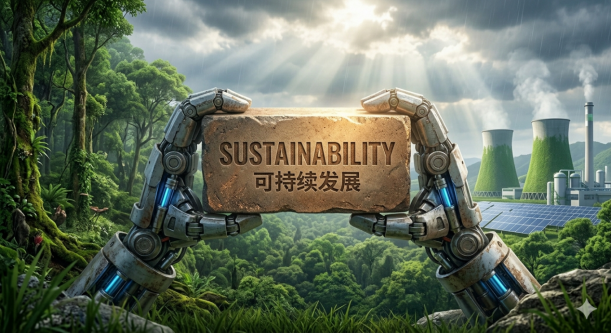

 0371-65798188
 sjs@shinjiasheng.com
 Tianyi Mansion, Room 1509, No. 129 Huang He Road, Zhengzhou, China