- Home
- About Us
- Products
- Product knowledge
-
News Center
News Center
- Contact Us



Under the grand narrative of the global energy transition, the explosive growth of the lithium battery industry has not only rewritten the automotive landscape but is also launching a silent "resource squeeze" against the traditional refractory sector. As industrial bedrocks, refractories rely on core raw materials like bauxite, graphite, and various synthetic minerals—resources that are now being fiercely contested by the energy storage market. This impact transcends simple price volatility; it has evolved into a profound restructuring of resource allocation. As well-funded lithium giants penetrate upstream segments, traditional refractory supply chains are being forced to find equilibrium within an increasingly narrow space.
This squeeze is most acutely felt in the graphite and carbonaceous material segments. As a vital component of lithium-ion anodes, synthetic graphite demand has surged exponentially, directly stripping refractory manufacturers of their bargaining power. High-quality graphite streams that once fed refractory brick production are now prioritized for higher-value, battery-grade applications. For refractory firms, this brings more than just skyrocketing costs; it presents the daunting challenge of confronting capital-heavy battery supply chains to secure reliable raw materials.
In the alumina sector, the demand for high-purity alumina in battery separator coatings is similarly tipping the supply-demand balance. Due to its critical role in battery safety, production lines for refractory raw materials are shifting toward electronic-grade outputs, causing structural shortages in the alumina aggregates needed for high-temperature industries. This unidirectional flow of resources further compresses the profit margins of refractory processing. The industry faces a stark reality: even when raw materials are locally sourced, high-quality reserves are often locked away via long-term off-take agreements by lithium-ion behemoths.
Simultaneously, the overlap in energy costs creates an additional layer of pressure. Refining battery-grade materials is a highly energy-intensive process, and the expansion of this capacity has strained industrial energy quotas in certain regions. Refractory processing, another energy-heavy sector, often finds itself prioritized behind strategic emerging industries in the queue for energy consumption. This imbalance in policy support and energy quotas indirectly inflates processing costs. Companies are finding that they are not just buying raw materials but paying a premium for increasingly scarce energy and carbon credits, accelerating the drain on profitability for mid-to-low-end products.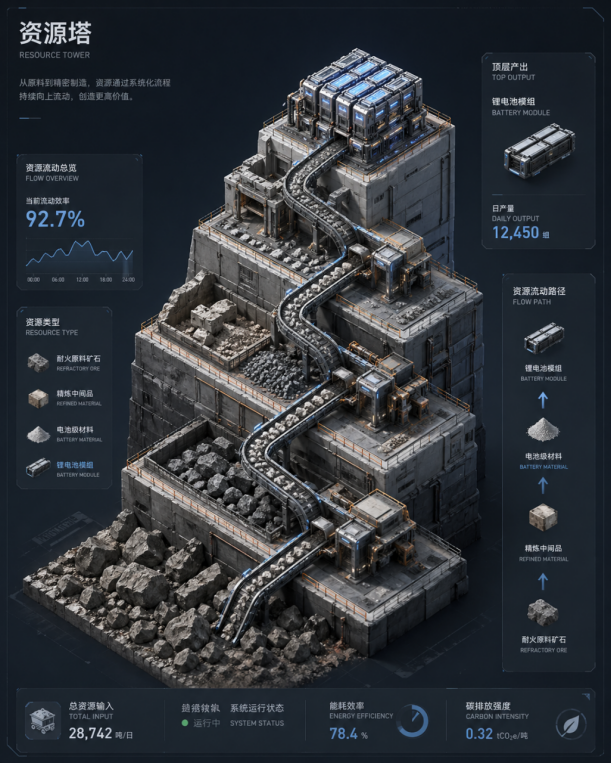
Nevertheless, this crisis harbors new opportunities for industrial symbiosis. To counter the pressure from the lithium sector, refractory enterprises are exploring material recycling and the development of alternative resources. Leading suppliers are researching new binders compatible with secondary raw materials or enhancing process precision to reduce reliance on scarce resources. In the future, the relationship between refractories and the lithium industry will move beyond pure competition toward deep cooperation in areas like solid-state electrolyte carriers and high-temperature sintering kilns. This shift from antagonism to integration will be the key to the refractory industry’s self-salvage in the New Energy Era.

 0371-65798188
 sjs@shinjiasheng.com
 Tianyi Mansion, Room 1509, No. 129 Huang He Road, Zhengzhou, China