- Home
- About Us
- Products
- Product knowledge
-
News Center
News Center
- Contact Us



In the second half of the contemporary global competitive era, the era of isolated corporate struggle is rapidly being replaced by synchronized "Academic-Industrial Alliances." This model is far more than simple university-enterprise cooperation; it is a profound correction of resource misallocation. By deeply binding academic innovative capacity with corporate market sensitivity, the barriers to entry in various industries are shifting from pure capacity-based rivalry to a higher dimension of technological sovereignty. The rise of these alliances marks a new epoch where "consortiums" serve as the basic unit of competition, fundamentally disrupting traditional vertical management structures.
From the perspective of competitive barriers, academic-industrial alliances establish a "Knowledge-Application" closed loop, creating an insurmountable technological moat. In sectors with high technical barriers, such as refractory materials and fine chemicals, cutting-edge theories in university laboratories often precede market application by several years. When enterprises gain prioritized access to these theories through alliances and achieve rapid industrialization, they create a generational advantage. This edge no longer relies on marketing tactics or pricing strategies but stems from a precise mastery of underlying physical and chemical laws, making it nearly impossible for competitors to catch up through mere imitation.
The leap-frog improvement in innovation efficiency is another core driver of this alliance model. Under traditional frameworks, the transformation of scientific achievements often faces a "Valley of Death"—the gap between laboratory results and industrial products. Academic-industrial alliances bridge this gap by establishing communal R&D platforms, moving the research process closer to market demand. This results in an efficient cycle where "demand drives R&D, and R&D nourishes production." This collaborative mechanism drastically shortens product iteration cycles, allowing companies to upgrade technologies at lower trial-and-error costs and maintain a leading position in a volatile market.
Furthermore, these alliances are pushing industries to transition from "zero-sum games" to "symbiotic ecosystems." Within this structure, core enterprises, pilot-scale bases, and research institutes are no longer isolated entities but a community with shared interests and risks. The internal flow of information and talent accelerates the formation of industry standards and patent pools, thereby securing greater discourse power in the global supply chain. This niche advantage allows alliance members to collectively withstand macro-economic cycles, demonstrating extraordinary resilience through systematic risk-mitigation capabilities.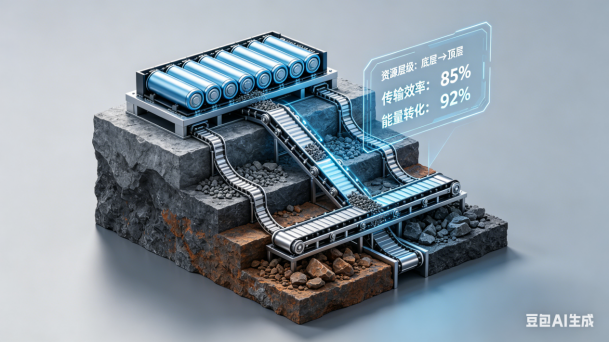
Looking ahead, the depth and breadth of academic-industrial alliances will directly determine the industrial competitiveness of regions and nations alike. With the intervention of digital technologies and AI, these alliances are evolving toward "cloud collaboration," enabling real-time matching of global intellectual resources with production factors. Enterprises will no longer be restricted by geographic location or internal R&D budgets; instead, they will find optimal partners across a globalized innovation map. This decentralized, networked competitive landscape heralds a new stage of industrial civilization where collaborative innovation is the only passport to success.

 0371-65798188
 sjs@shinjiasheng.com
 Tianyi Mansion, Room 1509, No. 129 Huang He Road, Zhengzhou, China