- Home
- About Us
- Products
- Product knowledge
-
News Center
News Center
- Contact Us



In high-temperature industrial production, besides the “working layer” refractories that directly contact flames and molten material, there is another category of materials that, while not directly involved in smelting, plays a decisive role in a plant’s economic efficiency—these are lightweight insulating refractory materials. Their main task is to reduce heat loss and improve thermal efficiency, serving as a key barrier for industrial energy savings.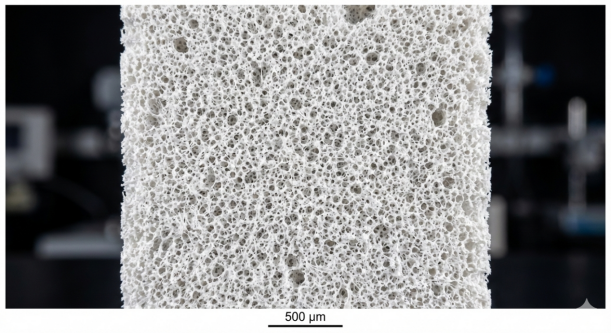
1. Insulation principle: blocking heat flow with pores
The defining feature of lightweight insulating materials is their high porosity and low bulk density.
From a physics perspective, air is a poor conductor of heat (the thermal conductivity of still air is very low). Lightweight refractories are manufactured using specialized processes—such as adding combustible materials or using foaming techniques—to create countless tiny, closed pores within the material. These pores act like miniature “air insulation chambers,” interrupting solid heat transfer paths and significantly lowering thermal conductivity.
Typically, lightweight refractory bricks have porosity exceeding 45%, with bulk density only 1/2 to 1/4 that of dense bricks. This means that for the same wall thickness, using lightweight materials can substantially reduce outer wall temperatures and minimize heat loss.
2. Main types and performance characteristics
Based on chemical composition and physical form, commonly used industrial lightweight insulating materials include:
Lightweight refractory bricks:Alumina hollow sphere bricks: High-end insulation bricks made by sintering hollow alumina spheres. They provide insulation and high compressive strength, and can even withstand direct contact with flames above 1700°C, commonly used in ultra-high-temperature furnace linings.
Lightweight mullite bricks: Balanced performance with low thermal expansion, often used in heating furnaces and cracking furnaces as an insulating layer.
Fly-ash bead bricks: Made from fly-ash cenospheres from power plants, they are low-cost and suitable for medium- to low-temperature insulation.
Refractory fiber products: Such as alumina-silicate fiber blankets and modules. These materials are extremely lightweight, flexible, and highly resistant to thermal shock. Modern industrial furnaces increasingly adopt “full-fiber linings,” which significantly reduce the load on steel structures and enable rapid heating.
Lightweight castables: Unshaped refractories mixed with aggregates such as expanded clay, perlite, or hollow spheres. They are easy to install and suitable for insulating complex-shaped sections.
3. Limitations and precautions in application
Although lightweight materials provide significant energy savings, their limitations must be clearly understood:
Low strength: Due to high porosity, their compressive strength is far lower than dense materials, and they cannot bear heavy loads.
Poor slag resistance: The porous structure allows molten slag or metal to penetrate the brick, causing rapid deterioration. Therefore, lightweight materials must never contact molten materials directly.
High firing shrinkage: Some lower-grade insulating materials may undergo significant volumetric shrinkage under prolonged high temperatures, potentially causing collapse or cracks in the insulation layer.
4. Summary
Lightweight insulating refractories are fundamental to achieving large-scale, lightweight, and energy-efficient industrial furnaces. A well-designed composite lining—using dense bricks for erosion resistance in the inner layer and lightweight bricks or fibers for insulation in the outer layer—locks heat inside the furnace, representing the standard design paradigm for modern thermal equipment.

 0371-65798188
 sjs@shinjiasheng.com
 Tianyi Mansion, Room 1509, No. 129 Huang He Road, Zhengzhou, China